
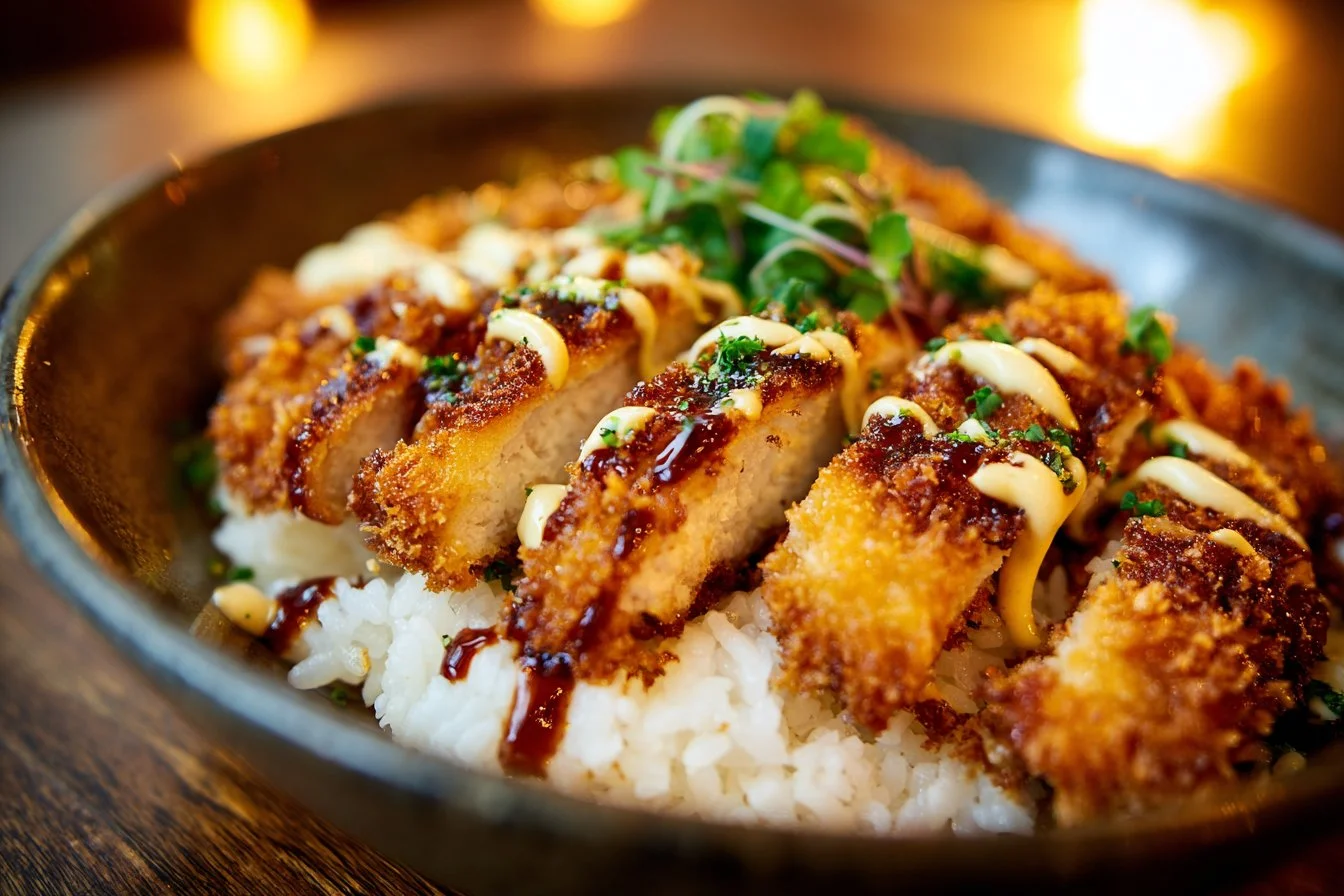
There’s nothing quite like the satisfaction of a crispy katsu cutlet resting on a bed of fluffy rice, drizzled with savory tonkatsu sauce. Whether it’s a busy weeknight or a laid-back weekend, this Japanese comfort food warms your soul with every bite. The crispy exterior gives way to a tender and juicy pork loin, making it a delightful treat for all ages. Plus, this dish allows for easy customization, accommodating a variety of tastes and preferences.
As a bonus, this recipe is a breeze to prepare and requires only a handful of ingredients you can find at your local grocery store. Perfect for families looking for a crowd-pleaser, it comes together in under 30 minutes, making it an ideal choice for a quick yet satisfying dinner. If you’re in the mood for something comforting and delicious, dive into these Japanese Katsu Bowls with Tonkatsu Sauce!
Why Make This Recipe
Opting for katsu bowls means you’re not just serving a meal; you’re delivering a delightful experience. The blend of juicy pork and crunchy panko imparts a wonderful balance of textures that you simply can’t resist.
Fast prep time is another highlight; with the steps laid out simply, you can have dinner ready in just about 30 minutes. This means more time spent enjoying your meal rather than slaving away in the kitchen.
Additionally, this recipe is budget-friendly, accommodating any wallet without compromising on flavor. Simple ingredients transform into a dish that feels special and indulgent, making it great for both casual nights and special occasions.
How to Make Japanese Katsu Bowls with Tonkatsu Sauce
Ingredients
- 4 pork loin cutlets
- 1 cup panko breadcrumbs
- 1/2 cup all-purpose flour
- 2 eggs, beaten
- Salt and pepper to taste
- 2 cups cooked rice
- 1/2 cup tonkatsu sauce
- Vegetable oil for frying
- Optional toppings: sliced green onions, pickled ginger
Directions
Prepare the Cutlets: Begin by seasoning the pork cutlets generously with salt and pepper. This step is essential as it captures the flavor right from the get-go.
Breading Process: Dredge each cutlet in all-purpose flour, ensuring it’s fully coated. Next, dip the floured cutlet in the beaten eggs, allowing any excess to drip off, before covering it thoroughly with panko breadcrumbs. For the best coating, press the breadcrumbs gently into the meat.
Heat the Oil: In a large skillet, heat about 1/2 inch of vegetable oil over medium heat until the oil shimmers (around 375°F).
Fry the Cutlets: Carefully add the breaded cutlets to the hot oil. Fry each piece for 3-4 minutes on each side, until they become golden brown and cooked through. You’ll know they’re ready when they’re bubbling at the edges and fragrant.
Draining: Once done, remove the cutlets from the pan and place them on a plate lined with paper towels to drain off excess oil.
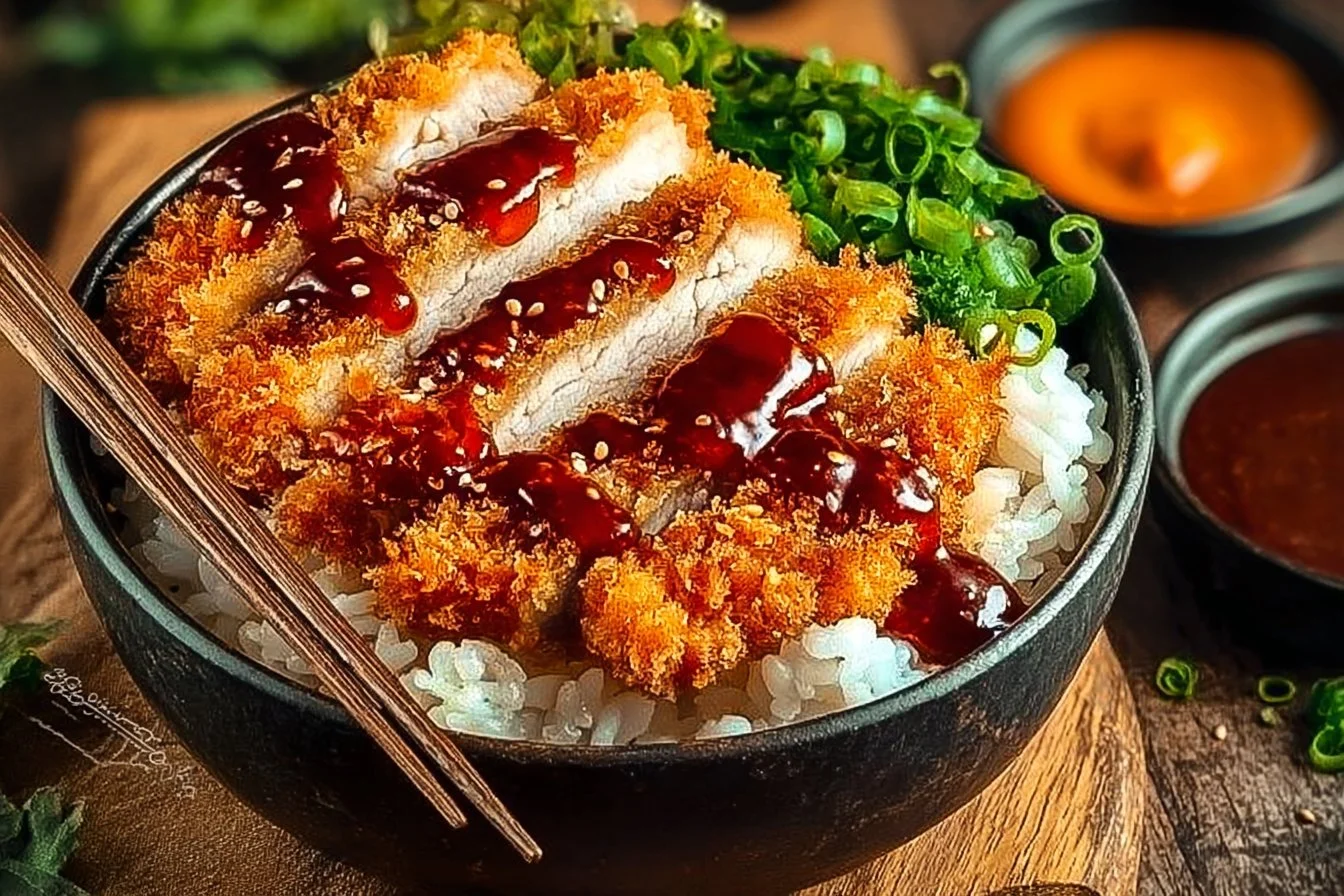
Assemble the Bowls: Serve each cutlet on a generous bed of fluffy rice, and drizzle the tonkatsu sauce liberally over the top, allowing it to soak in if you like a more robust flavor.
Garnish: For that extra pop of flavor and color, garnish your dish with sliced green onions and pickled ginger.
How to Serve Japanese Katsu Bowls with Tonkatsu Sauce
Japanese katsu bowls are best enjoyed hot. For presentation, serve them in deep bowls, letting the rice peek out beneath the beautifully breaded cutlet. The look of the crispy pork alongside a drizzle of glossy tonkatsu sauce is a feast for the eyes.
Consider pairing your katsu with a light, refreshing salad or miso soup for a complete meal. Alternatively, you can elevate the dish further by serving it alongside chilled beer or sake. For that touch of sophistication, add a sprinkle of furikake, a traditional Japanese seasoning blend made of seaweed, sesame seeds, and other ingredients.
How to Store Japanese Katsu Bowls with Tonkatsu Sauce
If you have leftovers, storing them properly is vital for quality. Place any remaining katsu cutlets in an airtight container and refrigerate them for up to 3 days. For longer storage, they freeze well; wrap them tightly in plastic wrap and then in aluminum foil. Frozen katsu can last for about 2 months.
When you’re ready to enjoy your leftovers, the best way to reheat is in the oven at 350°F until heated through, which preserves their crispy texture better than a microwave would. To check if they’re still good to eat, look for any signs of discoloration or off odors.
Tips to Make Japanese Katsu Bowls with Tonkatsu Sauce
Pound the Cutlets: For even cooking, consider lightly pounding the cutlets to a uniform thickness before breading.
Bakery-Quality Panko: Seek out quality panko breadcrumbs, which tend to produce a crispier texture compared to regular breadcrumbs.
Don’t Overcrowd the Pan: Fry in batches if necessary; overcrowding can lower the oil temperature, leading to greasy cutlets.
Set Up a Dredging Station: Organizing your flour, eggs, and panko in an assembly line makes the breading process quicker and prevents mess.
Adjust Oil Temperature: If the cutlets aren’t browning after a few minutes, increase the heat slightly. Conversely, if they brown too fast but aren’t cooked through, lower the heat.
Flavor Variations: Add flavor by mixing spices like garlic powder or cayenne pepper into the flour or panko.
Garnish Generously: Don’t hold back on garnishes like pickled vegetables or fresh herbs. They add depth and enhance the overall eating experience.
Make-ahead Rice: Cook your rice in advance and store it properly. Reheating rice in the microwave with a splash of water can make it fluffy again.
Different Sauces: Try serving with different sauces or even whip up a homemade sesame sauce for a twist.
Transform Leftovers: Turn leftover katsu into sandwiches or katsu curry for a completely different dining experience.
Variations
Crispy Tofu Katsu: For a vegetarian twist, replace the pork with firm tofu. Slice the tofu into thick slabs, press to remove excess moisture, then follow the same breading and frying process.
Chicken Katsu Delight: Swap the pork for chicken breasts. The cooking time stays the same, yielding a unique flavor while maintaining the crispy appeal.
Pork Katsu Curry: Add a flavorful layer by serving your katsu with Japanese curry sauce over the rice, turning this dish into a hearty meal that’s perfect for chilly evenings.
Spicy Katsu Bowl: Mix sriracha into your tonkatsu sauce for a kick, or add sliced jalapeños on top before serving for those who like a little heat.
Gluten-Free Katsu Bowls: Use almond flour or gluten-free breadcrumbs like crushed rice crackers to create a gluten-free version of this dish, ensuring everyone can enjoy the flavors.
FAQs
Can I make this ahead of time?
Yes, you can prep the cutlets and bread them before frying. Just store them in the refrigerator until you’re ready to cook. Fried katsu can also be made ahead and reheated.
How do I store leftovers?
Store leftover katsu cutlets in an airtight container in the refrigerator for up to 3 days. Ensure that the rice is also kept separately in a sealed container.
Can I freeze this dish?
Absolutely! Wrap uncooked breaded cutlets tightly and freeze for future use. Cooked cutlets can also be frozen for up to 2 months. Thaw in the refrigerator before reheating.
What can I substitute for panko breadcrumbs?
You can use regular breadcrumbs in a pinch, but for the best texture, crushed cornflakes or crushed rice crackers also make excellent substitutes.
How do I prevent the cutlets from getting soggy?
Ensure your oil is hot enough before adding the cutlets. This creates a crispy seal. Also, drain them on paper towels immediately after frying.
Is this gluten-free?
The traditional recipe is not gluten-free due to the use of flour and panko. However, you can create a gluten-free version by using specific gluten-free breadcrumbs and flour alternatives.
Can I double/halve this recipe?
Yes! You can easily scale the recipe up or down depending on the number of servings needed. Adjust the cooking times slightly to ensure even cooking.
Bringing comfort food to the table doesn’t get any easier or delicious than this! Enjoy your culinary journey into the heart of Japanese cuisine with these Katsu Bowls that are sure to impress.
Print
Japanese Katsu Bowls with Tonkatsu Sauce
- Total Time: 30 minutes
- Yield: 4 servings
- Diet: Non-Vegetarian
Description
A comforting Japanese dish featuring crispy katsu cutlets on a bed of rice, drizzled with savory tonkatsu sauce.
Ingredients
- 4 pork loin cutlets
- 1 cup panko breadcrumbs
- 1/2 cup all-purpose flour
- 2 eggs, beaten
- Salt and pepper to taste
- 2 cups cooked rice
- 1/2 cup tonkatsu sauce
- Vegetable oil for frying
- Optional toppings: sliced green onions, pickled ginger
Instructions
- Prepare the cutlets: Season the pork cutlets generously with salt and pepper.
- Breading process: Dredge each cutlet in flour, dip in beaten eggs, and coat with panko breadcrumbs.
- Heat the oil: Heat about 1/2 inch of vegetable oil in a skillet over medium heat.
- Fry the cutlets: Add the breaded cutlets to the hot oil, frying for 3-4 minutes on each side.
- Drain the cutlets: Remove from the pan and place on paper towels to drain.
- Assemble the bowls: Serve each cutlet over rice and drizzle with tonkatsu sauce.
- Garnish: Add sliced green onions and pickled ginger as desired.
Notes
For even cooking, pound the cutlets to a uniform thickness before breading. Store leftovers in an airtight container for up to 3 days.
- Prep Time: 10 minutes
- Cook Time: 20 minutes
- Category: Main Course
- Method: Frying
- Cuisine: Japanese